🌟 Best in Travel 2026 is here!
Indonesia
countryAsia
4.88 / 5.0

Indonesia

An emerald archipelago of ancient temples, smoking volcanoes, and vibrant coral reefs.

Advertisement
Editorial Guide

About Indonesia

Straddling the equator between the Indian and Pacific Oceans, Indonesia is a sprawling archipelago of over 17,000 islands that defies easy generalization. It is a land of staggering geographic and biological diversity, where mist-shrouded volcanic peaks rise dramatically from emerald-green jungles, and ancient Hindu and Buddhist temples stand as silent monuments to past kingdoms. From the artistic soul of Bali and the smoking craters of Java to the remote, prehistoric landscapes of Flores and the pristine underwater realms of Raja Ampat, Indonesia offers an extraordinary sensory journey for the intrepid traveler.

The cultural fabric of Indonesia is woven from hundreds of distinct ethnic groups, speaking over 700 languages and dialects, unified under the national motto 'Bhinneka Tunggal Ika' (Unity in Diversity). Here, centuries-old animist traditions, profound Hindu-Buddhist philosophies, and vibrant Islamic practices coexist in a daily rhythm defined by deep spirituality, intricate craftsmanship, and unmatched hospitality. Traditional gamelan music floats through humid tropical air, shadow puppet performances recount ancient epics, and sacred ceremonies transform ordinary streets into vibrant rivers of color and devotion.

Geographically, Indonesia sits squarely on the volatile Pacific Ring of Fire, a position that has blessed the country with incredibly fertile volcanic soils, terraced rice paddies that cling to steep hillsides, and a topography of breathtaking, raw power. Mount Bromo and Mount Ijen in East Java offer ethereal lunar landscapes, while the lush rainforests of Sumatra and Borneo harbor critically endangered wildlife, including orangutans, rhinoceros, and majestic tigers. The surrounding seas are part of the Coral Triangle, boasting the world's highest marine biodiversity, making it a global mecca for scuba divers and ocean explorers.

Daily life in the archipelago is an immersive experience of sensory abundance. It is tasted in fiery sambals pounded in stone mortars, fragrant clove-scented kretek clove cigarettes, and street-side stalls serving steaming bowls of bakso and nasi goreng. It is seen in the rhythmic hands of batik artisans carefully applying hot wax to cloth and the mesmerizing footwork of traditional dancers draped in gold leaf. To travel through Indonesia is to step into a living museum of human culture and natural wonder, where every island reveals a completely different universe waiting to be explored.

Visual Impressions & Moments
Indonesia photo 1
Indonesia photo 2
Indonesia photo 3
Indonesia photo 4
Indonesia photo 5
Indonesia photo 6
Unmissable Moments

Top Things to Do in Indonesia

Must-Do

Witness Sunrise Over Borobudur Temple

Ascend the world's largest Buddhist temple in Central Java before dawn, watching the sun break through the mist and illuminate carved stone reliefs and surrounding volcanoes. Built in the 9th century, this architectural marvel is a profound spiritual experience. Insider tip: Book the sunrise tour through Manohara Hotel to gain access to the monument grounds before general public opening hours.

Adventure

Sail Among Prehistoric Dragons in Komodo National Park

Embark on a traditional phinisi liveaboard boat through the rugged, savannah-covered islands of Flores. Trek through scrubland to observe the legendary, carnivorous Komodo dragons in their natural habitat, and snorkel pristine coral gardens at Pink Beach and Manta Point. Insider tip: Choose a multi-night cruise departing from Labuan Bajo to reach the more remote islands away from day-trippers.

Scenic

Marvel at the Blue Flames of Mount Ijen

Trek by moonlight up the sulfuric slopes of East Java's Mount Ijen to witness the rare and mesmerizing electric-blue flames erupting from sulfur mining vents. As dawn breaks, look down into the world's largest highly acidic turquoise crater lake while miners haul heavy sulfur loads out of the caldera. Insider tip: Wear a high-grade respirator mask; the sulfur fumes can be overwhelming without proper protection.

Culture

Immerse in the Cultural Heart of Ubud

Explore the cultural capital of Bali, nestled among emerald rice paddies and deep river gorges. Visit sacred water temples, study traditional silver smithing or wood carving, practice yoga in open-air jungle pavilions, and sample plant-based organic cuisine. Insider tip: Skip the crowded Ubud Monkey Forest in favor of walking the quiet, picturesque Campuhan Ridge Walk at sunrise.

Must-See Highlights

Top Places & Things to Do in Indonesia

Curated attractions and cultural landmarks with local insider advice.

Borobudur Temple
culture
4.9

Borobudur Temple

Constructed in the 8th and 9th centuries during the Sailendra dynasty, Borobudur is the world's largest Buddhist monument. Designed in the shape of a massive tantric Buddhist mandala, the structure features six square platforms adorned with 2,672 relief panels and 504 Buddha statues. Pilgrims traditionally walk around each platform in a clockwise direction, ascending toward enlightenment. The monument was lost for centuries beneath volcanic ash and jungle growth before being rediscovered in the 19th century. Today, it remains an active place of pilgrimage and one of Southeast Asia's most awe-inspiring architectural achievements, offering sweeping views over the surrounding Kedu Plain and misty mountains.

06:30 - 17:00 daily
Admission: IDR 375,000
Insider Tip: Book the sunrise ticket in advance to climb to the upper platforms before general crowds arrive.
Komodo National Park
nature
4.95

Komodo National Park

Spanning several rugged volcanic islands between Sumbawa and Flores, Komodo National Park is a UNESCO World Heritage site established primarily to protect the world's largest living lizard, the Komodo dragon. These formidable reptiles can grow up to three meters in length and roam freely across the dry, savanna-like landscapes of the park. Beyond the dragons, the marine environment within the park is among the richest on Earth. Drift diving and snorkeling here reveal kaleidoscopic coral gardens, manta rays, sea turtles, and pristine pelagic ecosystems nurtured by strong nutrient-rich currents flowing between the Indian and Pacific Oceans.

Open 24/7 (boat tours operate dawn to dusk)
Admission: IDR 300,000+ park fees
Insider Tip: Always stay close to your appointed park ranger during island walks, as dragons are surprisingly fast.
Uluwatu Temple
culture
4.8

Uluwatu Temple

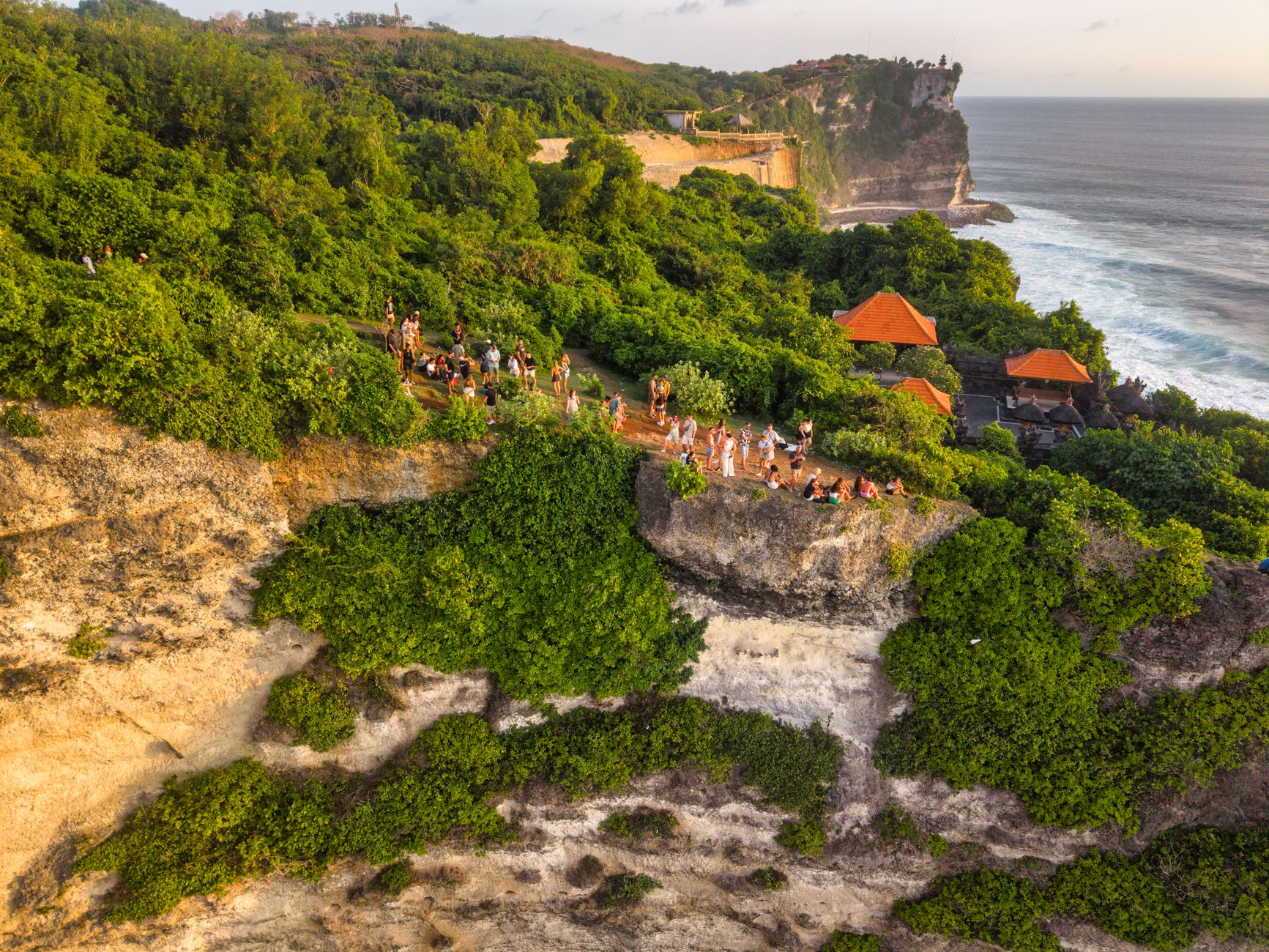
Perched precariously on a sheer black limestone cliff 70 meters above the crashing waves of the Indian Ocean, Pura Luhur Uluwatu is one of Bali's foundational spiritual pillars (Sad Kahyangan). Dedicated to the spirits of the sea, the temple dates back to the 11th century and offers some of the most dramatic coastal vistas in the archipelago. As dusk falls, the temple hosts traditional Kecak fire dances against the backdrop of a flaming sunset. Performers chant hypnotic rhythms in a circle around flickering torches, enacting scenes from the Ramayana without instrumental accompaniment, creating an unforgettable sensory spectacle.

07:00 - 19:00 daily
Admission: IDR 50,000
Insider Tip: Secure your tickets for the sunset Kecak dance early in the afternoon, as seating capacity is strictly limited.
Mount Bromo
nature
4.85

Mount Bromo

Rising dramatically from the vast, ash-covered expanse of the Sea of Sand within the Tengger Caldera in East Java, Mount Bromo is an active volcano of immense geological and spiritual significance. The entire landscape feels otherworldly, resembling a lunar landscape set against the towering backdrop of Mount Semeru, Java's highest peak. Trekkers and sightseers ascend viewpoint ridges before dawn to witness the sunrise paint the caldera in golden hues before descending across the volcanic plain to climb the 253 concrete steps leading directly to the roaring rim of the smoking crater.

Open 24/7
Admission: IDR 220,000 park entrance
Insider Tip: Temperatures at the viewpoint before dawn are remarkably cold; pack a windproof jacket, beanie, and gloves.
Area Guide

Where to Stay & Best Neighborhoods

Ubud & Central Bali

Best for: Culture seekers, wellness travelers, yoga enthusiasts, and art collectors.

Vibe: Jungle canopy, spiritual sanctuaries, artisan workshops, and bohemian wellness culture.

Sprawling across steep river valleys and terraced agricultural land, Ubud is Bali's intellectual and creative heartbeat. The air is perpetually heavy with the scent of burning incense and tropical blossoms. Narrow streets are lined with silver ateliers, painting galleries, and open-air organic cafes, while ancient stone temples peek out from dense jungle foliage.

Canggu & Seminyak

Best for: Digital nomads, surfers, foodies, and sunset cocktail enthusiasts.

Vibe: Chic beach clubs, world-class surf breaks, trendy coffee shops, and vibrant nightlife.

Stretching along the southwest coast of Bali, this dynamic coastal strip represents modern Indonesian island chic. Black sand beaches break heavy swells for surfers, while sophisticated beach clubs host international DJs as the sun dips into the Indian Ocean. The culinary scene here rivals major global capitals, featuring innovative fusion restaurants and stylish boutique hotels.

Prawirotaman, Yogyakarta

Best for: History buffs, backpackers, culture lovers, and independent travelers.

Vibe: Historic bohemian quarter, batik workshops, art cafes, and relaxed traveler energy.

Located in the heart of Java's cultural capital, Prawirotaman is a historic neighborhood that historically housed batik artisans and royal guards. Today, it offers a welcoming, artsy atmosphere filled with vintage shophouses, cozy guesthouses, rooftop cafes, and easy access to the majestic Sultan's Palace (Kraton) and ancient temples.

Food & Drink Scene

What to Eat in Indonesia

Rendang

Originating from the Minangkabau people of West Sumatra, Rendang is slow-cooked beef simmered in coconut milk and a rich paste of lemongrass, galangal, garlic, turmeric, ginger, and chilies for hours until the liquid evaporates and the meat caramelizes. It was crowned the world's most delicious food, offering a complex, deeply savory, and spicy flavor profile.

🍴 Top spot: Garuda Restaurant (Padang)

Nasi Goreng

Indonesia's beloved national dish of stir-fried rice, seasoned generously with sweet soy sauce (kecap manis), garlic, shallots, and shrimp paste (terasi). Typically garnished with a fried egg, crispy shallots, cucumber slices, and skewered chicken satay with peanut sauce, it is enjoyed at any hour of the day.

🍴 Top spot: Surrounding street vendors across Java and Bali

Babi Guling

A celebratory Balinese specialty consisting of whole suckling pig stuffed with a rich spice paste (basa genep) featuring turmeric, coriander, lemongrass, galangal, and fiery bird's-eye chilis. Slow-roasted over open coconut husks until the skin achieves an impossibly crisp texture, it is served with fragrant rice, spiced pork sausage, and crispy skin.

🍴 Top spot: Ibu Oka (Ubud, Bali)
Excursions

Best Day Trips from Indonesia

Prambanan Temple Compound

30 mins by taxi or train from Yogyakarta

Explore the soaring 9th-century Hindu temple compound dedicated to the Trimurti (Brahma, Vishnu, and Shiva), featuring intricate stone reliefs depicting the Ramayana epic.

Nusa Penida Island Adventure

45 mins by speedboat from Sanur, Bali

Speedboat across the Badung Strait to dramatic limestone cliffs, turquoise coves, and iconic viewpoints like Kelingking Beach and Broken Beach.

When to Go

Best Time to Visit & Seasonality

Editor’s Pick: The dry season, spanning from May to September, is widely considered the best time to visit most of Indonesia. During these months, skies are generally clear, rainfall is minimal, and ocean conditions are ideal for diving, surfing, and island hopping. July and August bring peak international crowds and higher prices, particularly to Bali and Lombok. The shoulder months of April, May, October, and November offer glorious weather with fewer tourists. The wet season runs from November to April, bringing heavy tropical downpours, high humidity, and rough seas, though it transforms the landscapes into vivid, lush masterpieces.

Spring Overview

(March - May)
Moderate
Average Temperature & Climate27°C - 32°C (80°F - 90°F)

Transitioning from wet to dry, warm, increasingly sunny with occasional afternoon tropical showers.

Crowd & Travel ConditionsModerate Tourist Traffic

Fewer lines and better deals.

✨ Seasonal Highlights:Waisak celebrations at Borobudur, lush post-monsoon landscapes, uncrowded beaches, and great diving conditions.
Travel Smarter

Practical Travel Essentials

CurrencyIndonesian Rupiah (IDR)
LanguageIndonesian (Bahasa Indonesia)
Time ZoneUTC+7 to UTC+9

Visa & Entry

Citizens of over 90 countries can obtain a 30-day Visa on Arrival (VoA) at major international airports and ports, which can be extended once for an additional 30 days. Many travelers also utilize the electronic Visa on Arrival (e-VoA) system prior to departure.

Getting Around & Transit

Domestic flights are essential for crossing between major islands (Java, Bali, Lombok, Sulawesi, Flores, Papua). Ferries connect neighboring islands, while ride-hailing apps like Gojek and Grab dominate urban transport in Java and Bali. Renting a scooter is popular in Bali and Lombok but requires an International Driving Permit and extreme caution.

Daily Budget Expectation

$50 - $150 USD per day for a comfortable mid-range travel experience, covering clean boutique accommodation, local warung meals, and occasional excursions.

Safety & Health

Indonesia is generally safe for travelers, with low rates of violent crime. Petty theft (bag snatching) occurs in crowded tourist areas. The primary hazards are natural: volcanic eruptions, earthquakes, tropical storms, and strong ocean rip currents. Travel insurance covering adventure activities and medical evacuation is strongly recommended.

Local Etiquette & Customs

Dress modestly when visiting temples and rural areas (shoulders and knees covered; sarongs are often provided at temples). Always use your right hand for eating, paying, and passing items, as the left hand is traditionally considered unclean. Remove shoes before entering homes and sacred spaces.

Questions & Answers

Frequently Asked Questions about Indonesia

While major hotels, upscale restaurants, and supermarkets accept credit cards, cash (Indonesian Rupiah) is essential for street food vendors, local warungs, rural areas, traditional markets, and transport. ATMs are widely available in cities and tourist hubs.