
Portugal’s southernmost province, the Algarve, is a sun-drenched wonderland of dramatic limestone cliffs, golden sands, and turquoise waters. Spanning over 150 kilometers of Atlantic coastline, this region offers everything from wild, wind-swept surf beaches to calm, family-friendly lagoons.
Whether you are looking to embark on a scenic road trip or simply want to lounge under a straw umbrella with a plate of fresh grilled sardines, finding the perfect stretch of sand is key to an unforgettable trip. In this comprehensive guide, we will dive deep into the best Algarve beaches, categorized by region, alongside practical safety tips, a realistic budget breakdown, and local secrets.
To begin planning your dream trip to Portugal, check out our Comprehensive Guide to Portugal or design your day-by-day route using the interactive Voyage Roams Trip Planner.
1. The Crown Jewels of Central Algarve
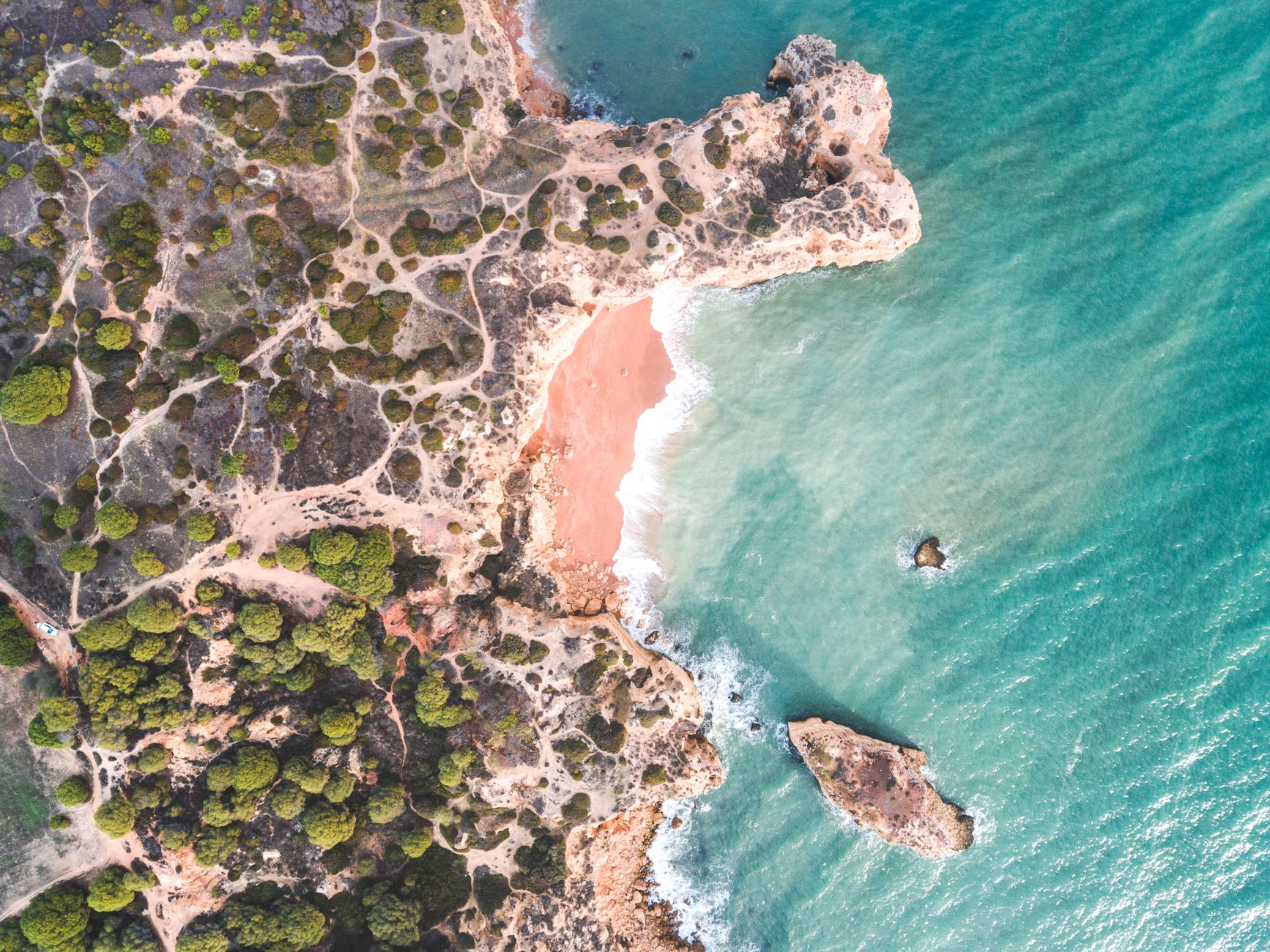
The central stretch of the Algarve—running roughly from Albufeira to Lagos—is famous for its iconic ochre cliffs, towering sea stacks, and hidden grottos. This is the postcard-perfect Algarve you have likely seen in travel magazines.
Praia da Marinha (Lagoa)
Often ranked among the most beautiful beaches in the world, Praia da Marinha is celebrated for its crystal-clear waters and striking double-arched rock formations (the "M" rock). Access is via a steep wooden staircase, but the reward at the bottom is unparalleled snorkeling and calm swimming conditions.
- Best for: Photography, snorkeling, and cliff-top walking trails.
- Insider Tip: Walk along the cliff-top trail toward the west before heading down to the sand; the view of the rock arches from above is spectacular.
Praia de Benagil & The Benagil Cave
Famous worldwide for its massive sea cave with a circular skylight (the Algar de Benagil), this beach is the launching pad for cave explorations.
- Best for: Adventure seekers and kayakers.
- Important Safety Note: Swimming to the cave from the beach is highly discouraged due to strong, unpredictable currents and heavy boat traffic. Instead, rent a kayak or stand-up paddleboard (SUP) to access the cave safely.
Local Secret: To experience Benagil Cave without the maddening crowds, book an early morning kayak tour starting at 7:00 AM. By 10:00 AM, the cave is flooded with motorized tour boats, ruining the serene atmosphere. For more thrilling ideas, browse our Adventure Trails Hub.
Praia da Falésia (Vilamoura/Albufeira)
For those who prefer endless sandy expanses over rocky coves, Praia da Falésia stretches for over six kilometers. Backed by stunning, multi-hued red and clay cliffs topped with umbrella pines, it is perfect for long, sunset strolls.
- Best for: Long walks, sunbathing, and families.
2. Wild and Untamed: The Western Vicentina Coast
If you want to escape the resort crowds and experience nature in its rawest form, head west past Lagos toward Sagres and up into the Costa Vicentina Natural Park. Here, the Atlantic Ocean crashes against dark schist cliffs, creating world-class surf breaks.
Praia do Amado (Aljezur)
This wide, sweeping bay is a mecca for European surfers. Surrounded by rolling hills and red sandstone cliffs, Praia do Amado has a laid-back, bohemian vibe with several surf schools operating directly from the sand.
- Best for: Surfing, bodyboarding, and rugged coastal scenery.
- Getting There: You will definitely want a rental car for this region. Consider checking out our Algarve Road Trip Itinerary to plan your driving route along the western coast.
Praia de Odeceixe (Aljezur)
Located on the border between the Algarve and the Alentejo regions, Odeceixe is a unique beach where a river (Ribeira de Seixe) curves around a broad peninsula of sand before emptying into the ocean. This creates a beach with two distinct sides: a calm, shallow river side perfect for families with young children, and a wild ocean side ideal for surfers.
- Best for: Families, paddleboarding, and nature lovers.
3. Island Escapes of the Eastern Algarve
East of Faro, the landscape shifts dramatically. The rocky cliffs disappear, replaced by the tranquil saltwater lagoons, mudflats, and sand barrier islands of the Ria Formosa Natural Park. The beaches here are located on offshore islands (ilhas), accessible only by ferry or water taxi.
Ilha de Tavira (Tavira)
Accessible via a quick, inexpensive ferry ride from the historic town of Tavira, this island offers miles of powdery white sand and warm, calm waters. Because the beach stretches for kilometers, you can easily find a secluded spot even in the height of July and August.
- Best for: Peace and quiet, warm water, and wildlife watching (including flamingos in the salt pans).
- Don't Miss: The Cemitério das Âncoras (Anchor Cemetery), a striking monument of rusted anchors left on the dunes by the former tuna fishing community.
Ilha da Armona (Olhão)
Armona is a car-free island paradise dotted with charming, colorful fishermen's cottages and sandy pathways. The beach on the ocean side is incredibly vast, boasting some of the softest sand in Portugal.
- Best for: A slow-paced, off-the-grid island experience.
4. The Practical Algarve Beach Checklist
Before you pack your sunscreen and head out, keep these essential tips in mind to ensure a safe and comfortable beach day:
- Check the Tides: Many of the smaller cove beaches in the Central Algarve (like Praia do Camilo) virtually disappear at high tide. Check local tide charts daily.
- Beware of Rockfalls: The limestone cliffs are beautiful but unstable. Never set up your towel directly beneath a cliff face; look for the warning signs (Desmoronamento).
- Pack Wind Protection: The western coast can get incredibly windy. A windbreak (para-vento) or a sturdy beach tent is highly recommended if you are heading west of Lagos.
- Water Temperatures: Don't let the Mediterranean climate fool you—this is the Atlantic Ocean. Water temperatures rarely rise above 20°C (68°F), even in mid-summer.
5. Budgeting for Your Algarve Beach Getaway
To help you manage your travel expenses, here is a realistic breakdown of daily costs when exploring the Algarve coast:
| Expense Category | Budget Traveler | Mid-Range Traveler | Luxury Traveler |
|---|---|---|---|
| Accommodation (per night) | €25 - €40 (Hostel dorm) | €80 - €150 (Guesthouse/AirBnB) | €250+ (Cliff-top resort) |
| Daily Transport | €5 - €10 (Buses/Trains) | €30 - €60 (Car rental + fuel) | €100+ (Private transfers/Taxis) |
| Food & Drink (per day) | €15 - €25 (Supermarkets/Bakeries) | €40 - €70 (Seafood bistros) | €120+ (Fine dining/Beach clubs) |
| Activities | Free (Beach lounging/Hiking) | €30 - €50 (Kayak rental/Boat tour) | €150+ (Private yacht charter) |
For more cost-saving strategies, read our Budget Travel Guides to make your Euro stretch further.
6. Traveler's FAQ & Practical Takeaways
What is the best month to visit the Algarve?
The shoulder seasons of May to June and September to October offer the perfect balance of warm weather, lower prices, and manageable crowds. July and August can be intensely hot and crowded.
Do I need a car to visit the best beaches?
While you can access popular beaches in Lagos and Albufeira using public transport or rideshares, having a rental car is essential for exploring the wilder beaches of the Western Vicentina Coast and the hidden trailheads of Lagoa.
Are there facilities at these beaches?
Most designated Praias (beaches) in the Algarve have seasonal lifeguards, public restrooms, and a beachside café (restaurante de praia) serving fresh seafood and cold drinks. However, the wilder western beaches may have limited facilities, so always pack plenty of water and snacks.