Introduction to India's Subterranean Wonders
Long before modern plumbing and municipal water grids, the arid landscapes of western and northern India demanded ingenious solutions to survival. Enter the baoli or vav—the magnificent stepwell. These subterranean architectural masterpieces plunge dozens of stories into the earth, serving not only as vital water reservoirs during brutal dry seasons, but also as cool, subterranean temples, community gathering spaces, and serene retreats for weary desert travelers.
Today, traveling through Rajasthan and Gujarat to witness these geometric labyrinths offers a profound glimpse into medieval engineering and artistry. Whether you are building your dream itinerary using our Voyage Roams Trip Planner or exploring deeper regional gems in our Comprehensive Guide, understanding the history and layout of these aquatic monuments transforms a simple sightseeing stop into an unforgettable journey.
Cultural Pro-Tip: Visit stepwells early in the morning just as the sun rises. The angled morning light casts dramatic shadows across the symmetrical staircases, creating world-class photography opportunities free of midday crowds.
The Engineering Marvel of Chand Baori (Abhaneri)
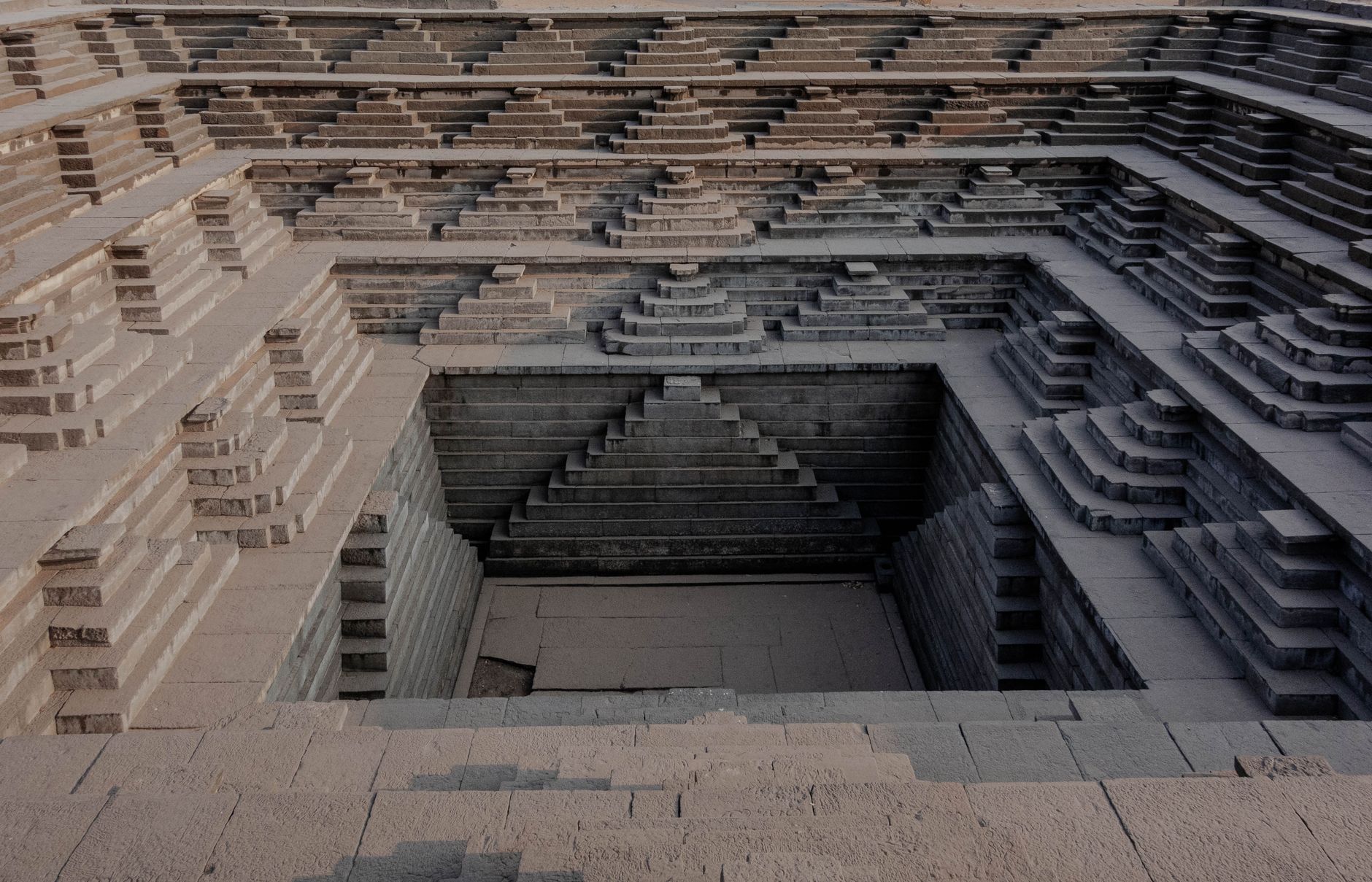
Located in the quiet village of Abhaneri in Rajasthan, Chand Baori is arguably the most famous stepwell in the world—and for good reason. Built in the 9th century by King Chanda of the Nikumbha Dynasty, it plunges 13 stories (about 100 feet) into the earth, featuring a staggering 3,500 narrow, perfectly symmetrical steps arranged in a dizzying geometric maze.
Standing at the top railing, the visual impact is nothing short of hypnotic. The steps converge in a sharp, inverted pyramid pattern toward the murky green water at the base. While you cannot walk down the steps anymore due to conservation efforts, viewing platforms offer unobstructed angles for photography.
- Location: Abhaneri village, 95 km east of Jaipur on the Jaipur-Agra highway.
- Best Time to Visit: October to March, when daytime temperatures are pleasant.
- How to Get There: Best visited as a day trip from Jaipur or as a stopover while driving between Jaipur and Agra.
Rani ki Vav (The Queen’s Stepwell) at Patan
If Chand Baori represents raw geometric symmetry, Rani ki Vav in Patan, Gujarat, is the absolute pinnacle of sculptural artistry. Commissioned in the 11th century by Queen Udayamati of the Solanki dynasty, this UNESCO World Heritage Site was actually silted over by floodwaters for centuries, preserving its intricate carvings in pristine condition until its excavation in the late 20th century.
The stepwell is designed as an inverted temple highlighting the sanctity of water. It descends through seven levels of stairs, adorned with more than 500 principal sculptures and over a thousand minor vignettes depicting Hindu deities, celestial nymphs (apsaras), and mythological motifs.
For more off-the-beaten-path cultural explorations, browse through our curated Adventure Trails and cultural features.
Secret Spot: Look closely at the water-level pillars of Rani ki Vav to find carvings of the multi-armed incarnation of Vishnu resting on the cosmic serpent, Sheshnag.
Delhi's Hidden Baolis: Agrasen ki Baoli and beyond
You do not need to venture deep into the Thar Desert to experience these subterranean marvels; bustling New Delhi harbors its own mysterious stepwells right amid the concrete jungle.
Agrasen ki Baoli, tucked away near Connaught Place, is a 60-meter-long and 15-meter-wide historical water reservoir featuring three levels of stunning stone architecture. Its dark, atmospheric corridors have inspired numerous cinematic thrillers and urban legends. Unlike many rural stepwells, visitors can still descend several steps here, making it a favorite spot for urban explorers and photographers.
Other Notable Delhi Stepwells:
- 1Gandhi Ji ka Baoli: Located in the Mehrauli Archaeological Park, offering a peaceful, ruined aesthetic.
- 2Hazrat Nizamuddin Baoli: An active, sacred stepwell tied to the famous Sufi shrine, where local boys traditionally dive into the holy waters.
If you are mapping out a multi-city historical tour of northern India, check out our Tested Itinerary Plan for seamless routing.
Budget Breakdown for Stepwell Explorations
Exploring India’s stepwells is remarkably budget-friendly, making it an ideal inclusion for travelers following Budget Travel Guides. Here is what a typical day of stepwell-hopping in Rajasthan or Gujarat looks like:
- Entrance Fees: Ranging from free (for neighborhood baolis in Delhi) to ₹300–600 ($4–$8 USD) for foreign tourists at major UNESCO sites like Rani ki Vav.
- Transportation: Hiring a private auto-rickshaw or taxi for a day of rural stepwell exploration typically costs ₹1,500–2,500 ($18–$30 USD).
- Guide Services: Certified local guides near major monuments charge around ₹500–1,000 ($6–$12 USD) for an in-depth historical walkthrough.
- Food & Hydration: Local street snacks and bottled water will cost less than $5 USD per day.
Traveler's Practical Takeaways & FAQ
- Are stepwells still used for drinking water? No. Most historic stepwells no longer function as active drinking water sources. Many are maintained purely as architectural monuments by conservation bodies like the Archaeological Survey of India (ASI).
- Can you swim in them? Swimming is strictly prohibited at all historic stepwells due to safety hazards, conservation laws, and the stagnant nature of the deep water basins.
- What should I wear? Because many stepwells double as historic sacred sites (and because India generally warrants modest attire), dress respectfully by covering your shoulders and knees.